
Podcast: Play in new window | Download
Subscribe: Spotify | Email | RSS | More
Mark Cuban approaches healthcare the same way he approaches every industry he enters: by assuming something essential is missing and then asking who benefits from keeping it that way. In American medicine, he believes that missing ingredient is transparency. Not better messaging, not smarter incentives, but simple visibility into how prices are set, who gets paid and who gets taken advantage of.
Cuban is a lifelong healthcare outsider. He is a billionaire entrepreneur, NBA championship team owner and longtime Shark Tank investor. That’s what makes him the perfect guest for Season 11 of Fixing Healthcare with cohosts Dr. Robert Pearl and Jeremy Corr.
This season’s guests have massive online audiences, but their value isn’t just reach. It’s their ability to listen closely to what millions of patients are experiencing, then translate those insights back into the broader medical conversation. Few guests embody that better than Cuban.
He has quickly become one of the system’s most incisive critics by paying attention to what patients, employers and clinicians repeatedly say is broken. That mindset led to the creation of Cost Plus Drugs, a pharmacy built on an idea that sounds radical only because healthcare has drifted so far from it. Show patients the actual cost of a medication, add a flat 15% markup and eliminate the opaque middlemen who thrive in the dark.
In this conversation, Cuban explains how a cold email from a physician opened his eyes to how hidden pharmaceutical pricing had become and why opacity itself became the opportunity.
HIGHLIGHTS FROM THE INTERVIEW
- Why drug prices are detached from reality. Cuban breaks down how widely used medications, including GLP-1 weight-loss drugs, can cost hundreds or thousands of dollars per month despite far lower manufacturing costs. The driver, he argues, is not innovation or scarcity, but a system dominated by pharmacy benefit managers whose rebate structures reward insurers and intermediaries while excluding patients.
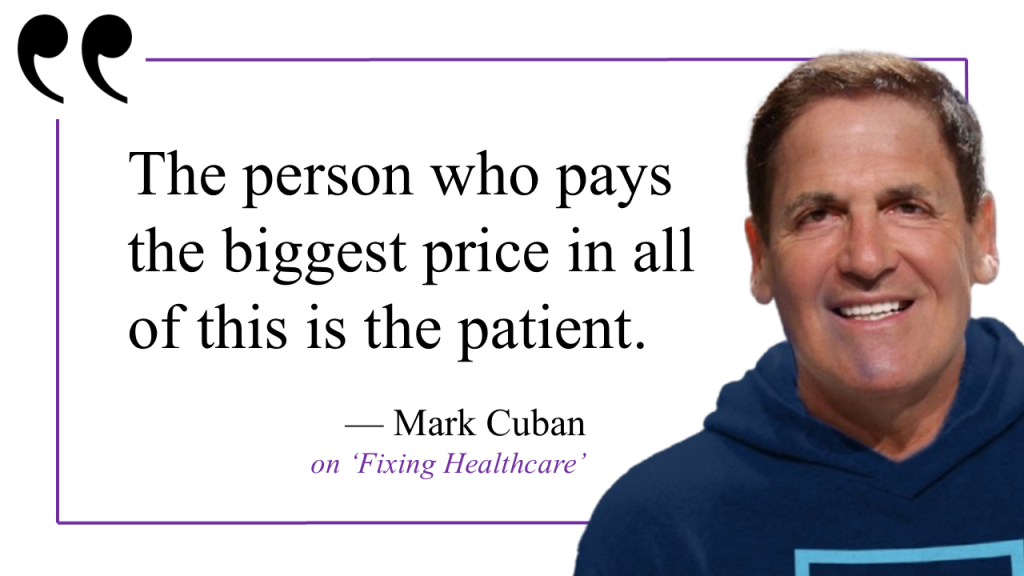
- How patients bear the greatest financial harm. With concrete examples, Cuban explains how people in deductible phases, especially those on ACA plans, often pay full retail prices while rebates flow elsewhere. Costs are spread across millions of plan holders, but the financial pain lands on the people who actually need care.
- Why healthcare’s complexity is intentional. From fax machines to prior authorization delays, Cuban argues that administrative friction is not accidental. It protects incumbents, drains clinician time and forces providers into the role of “subprime lenders,” all while patients struggle to navigate a system designed to obscure accountability.
- What he tells CEOs behind closed doors. Cuban outlines the first questions he asks corporate leaders about their pharmacy benefits, why most are not receiving the rebates they believe they are and how audits are often structured to reveal as little as possible. Transparency, he says, is the first step toward leverage.
- A blueprint beyond pharmaceuticals. The discussion extends into hospitals, insurance design and employer-based coverage, including Cuban’s work on cost-plus wellness contracts that publish negotiated rates so others can replicate them. His goal is not dominance. It is forcing the system to respond by making its incentives visible.
Throughout the episode, Cuban’s message is blunt and consistent. Healthcare does not need more jargon, better marketing or marginal tweaks. It needs sunlight. Once pricing, incentives and risk are exposed, many of the system’s most entrenched practices become much harder to justify.
* * *
Fixing Healthcare is a co-production of Dr. Robert Pearl and Jeremy Corr. Subscribe to the show via Apple, Spotify, Stitcher or wherever you find podcasts. Join the conversation or suggest a guest by following the show on Twitter and LinkedIn.