
Podcast: Play in new window | Download
Subscribe: Spotify | Email | RSS | More
In this week’s episode of Medicine: The Truth, hosts Dr. Robert Pearl and Jeremy Corr look closely at the stories and controversies shaping U.S. healthcare at the start of 2026.
From a severe flu season and resurgent vaccine-preventable diseases to drug pricing, autism research and the growing role of AI in medicine, the episode offers a data-driven look at where American healthcare is headed.
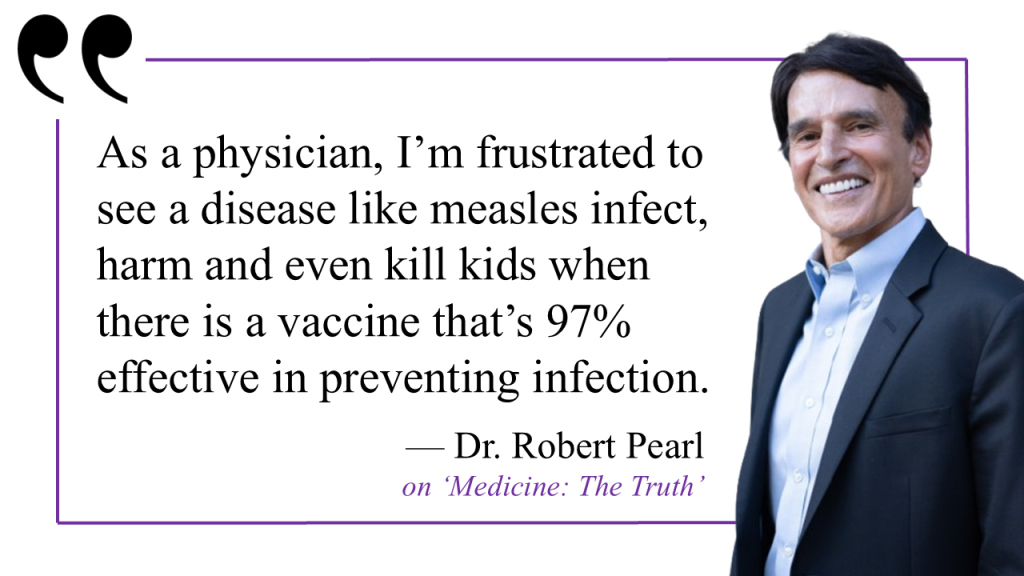
The show opens with warnings about infectious disease. A dangerous H3N2 flu strain is driving hospitalizations, particularly among children, while measles and whooping cough outbreaks continue to spread among unvaccinated populations.
To Dr. Pearl, these trends do not appear random. They reflect falling vaccination rates, weakened public-health messaging and growing political interference at federal agencies tasked with protecting the public.
From there, the conversation turns to vaccine policy itself. Recent changes at the CDC (including a sharply reduced childhood vaccine schedule and new recommendations against universal newborn hepatitis B vaccination) raise serious concerns. Pearl explains why comparisons to countries like Denmark (with its reduced vaccine schedule) are deeply misleading, and why abandoning universal vaccination in a fragmented U.S. healthcare system risks reversing decades of progress.
Here’s a look at other must-know stories from this episode of Medicine: The Truth:
- Positive vaccine evidence: New CDC data show significant reductions in emergency visits among children who received COVID vaccines, reinforcing their safety and effectiveness.
- Pandemic lessons for children: Pediatric obesity rose during COVID lockdowns, while mental health outcomes improved after schools reopened, underscoring the tradeoffs of prolonged closures.
- Drug pricing deals with manufacturers: The administration’s agreements with pharmaceutical companies apply narrowly to government purchases and exclude many high-cost drugs, limiting their overall impact.
- First oral GLP-1 approved: The FDA cleared the first pill version of a GLP-1 weight-loss drug, offering convenience but likely remaining unaffordable until prices fall closer to $200 per month.
- Autism research update: Rising autism prevalence is driven largely by broader diagnostic criteria and awareness. Large studies continue to show no link to vaccines or acetaminophen, while new research points to strong genetic factors and distinct autism subtypes.
- ACA exchange subsidy uncertainty: Congress has yet to prevent looming premium increases for millions of exchange enrollees. Pearl argues for avoiding coverage cliffs and capping household contributions as a share of income.
- Polypharmacy in seniors: One in eight Medicare Part D beneficiaries now takes eight or more medications, increasing the risk of side effects, falls and hospitalizations in a fragmented system.
- New dietary guidelines: Federal recommendations now emphasize animal protein alongside stronger warnings against sugar and ultra-processed foods, a shift that may conflict with earlier public-health messaging.
- AI’s expanding role in healthcare: OpenAI’s tools increasingly integrate health data from electronic records and consumer apps, signaling how quickly generative AI is becoming part of medical decision-making.
- Medicare and AI oversight: Traditional Medicare is moving toward AI-assisted prior authorization for certain procedures, a response to fraud and low-value care that Pearl says is inevitable as costs continue to rise.
Tune in to Medicine: The Truth for more fact-based coverage and analysis of healthcare’s biggest stories.
* * *
Dr. Robert Pearl is the author of the new book “ChatGPT, MD: How AI-Empowered Patients & Doctors Can Take Back Control of American Medicine” about the impact of AI on the future of medicine.
Fixing Healthcare is a co-production of Dr. Robert Pearl and Jeremy Corr. Subscribe to the show via Apple, Spotify, Stitcher or wherever you find podcasts. Join the conversation or suggest a guest by following the show on Twitter and LinkedIn.