
Podcast: Play in new window | Download
Subscribe: Spotify | Email | RSS | More
In this week’s episode of Medicine: The Truth, hosts Jeremy Corr and Dr. Robert Pearl balance two sides of American healthcare: the encouraging scientific advances that could help people live longer and healthier lives, and the growing affordability and trust crises threatening patients across the country.
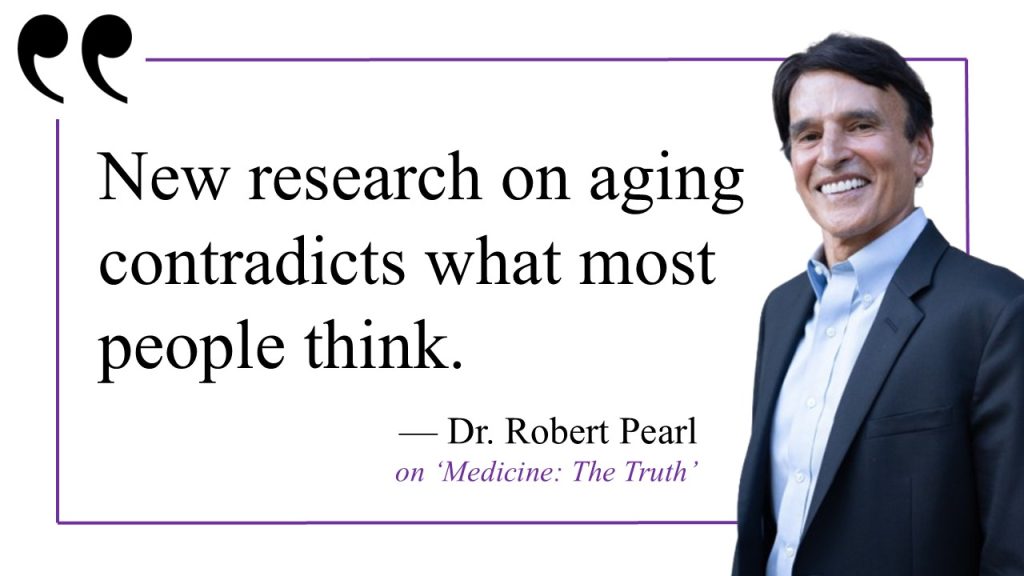
The conversation opens on an optimistic note. Dr. Pearl highlights new Yale research showing that aging is far less deterministic than many Americans assume. Rather than a steady and unavoidable decline, the study found that nearly half of adults over 65 improved physically, cognitively or both over a 12-year period.
He pairs that story with new cardiovascular guidance from the American College of Cardiology and the American Heart Association, which shifts prevention toward a much longer time horizon and argues that earlier LDL management could prevent a significant share of heart attacks and strokes later in life.
The episode then pivots to the mounting financial and institutional pressures facing patients, hospitals and public-health agencies. From rising medical debt and medication nonadherence to declining vaccine trust, hospital cost inflation and the political barriers keeping GLP-1 drugs unaffordable in the United States, the discussion captures both the promise and the fragility of healthcare in 2026.
Here are the other major storylines from episode 105:
- Supplements fail the evidence test: Pearl reviews clinical trial data showing that commonly used supplements such as fish oil, garlic, turmeric, cinnamon and red yeast rice performed no better than placebo in lowering LDL, reinforcing the continued value of lifestyle interventions and low-cost statins.
- Medical costs continue to destabilize families: New Gallup-linked research shows that 82 million Americans are already making sacrifices to pay medical bills, from skipping meals to delaying retirement.
- Drug unaffordability worsens medication adherence: A new KFF survey finds that nearly 60% of Americans worry about affording prescriptions, with 43% reporting they have not taken medications as prescribed because of cost.
- Generative AI adoption surges among physicians: According to a new AMA survey, 81% of doctors now use generative AI in clinical practice, most commonly for documentation, literature summaries and chart support.
- Hospitals face intensifying economic pressure: The American Hospital Association reports that care delivery costs rose 7.5% last year, driven by higher labor expenses, drug prices, supply inflation and sicker patients.
- Trust in vaccine authorities continues to erode: Following the legal challenge to RFK Jr.’s overhaul of the federal vaccine advisory committee, new polling shows trust in federal vaccine recommendations has fallen sharply.
- Newborn preventive care is now affected by distrust: Pearl warns that refusal of vitamin K shots, hepatitis B vaccination and antibiotic eye ointment at birth is rising, reversing decades of scientific progress and reintroducing preventable newborn risks.
- Alzheimer’s blood tests show progress, but not prediction: New FDA-cleared blood tests can help identify Alzheimer’s disease as the likely cause of current dementia, but Dr. Pearl explains why they remain far less useful for predicting disease years before symptoms begin.
- The fax machine may finally be dying: In one of the episode’s lighter moments, Dr. Pearl notes that CMS is moving to phase out fax-machine communication across HIPAA-covered entities, a long-overdue modernization step that could save taxpayers nearly $1 billion annually.
- Residency match reaches record size: The 2026 residency match was the largest in history, with more than 48,000 applicants competing for over 44,000 positions.
- Early heat waves carry serious health consequences: With unusual March heat across parts of the country, Dr. Pearl explains why early-season heat is especially dangerous, increasing risks of dehydration, kidney injury, cardiovascular strain and mental health emergencies.
- GLP-1 drugs go generic abroad while U.S. prices stay high: As Novo Nordisk’s blockbuster GLP-1 medications go generic in India and other global markets, Dr. Pearl contrasts international pricing with U.S. costs and argues that congressional inaction on drug pricing remains one of healthcare’s clearest failures.
Tune in for more fact-based analysis and practical perspective on the healthcare stories shaping medicine today.
* * *
Dr. Robert Pearl is the author of “ChatGPT, MD: How AI-Empowered Patients & Doctors Can Take Back Control of American Medicine” about the impact of AI on the future of medicine.
Fixing Healthcare is a co-production of Dr. Robert Pearl and Jeremy Corr. Subscribe to the show via Apple, Spotify or wherever you find podcasts. Join the conversation or suggest a guest by following the show on X and LinkedIn.