
Podcast: Play in new window | Download
Subscribe: Spotify | Email | RSS | More
In this week’s episode of Medicine: The Truth, hosts Jeremy Corr and Dr. Robert Pearl probe the facts beneath healthcare biggest headlines. Today’s show features an in-depth look at sweeping federal budget cuts, the expanding (and often misunderstood) impact of GLP-1 medications and what’s destabilizing health coverage.
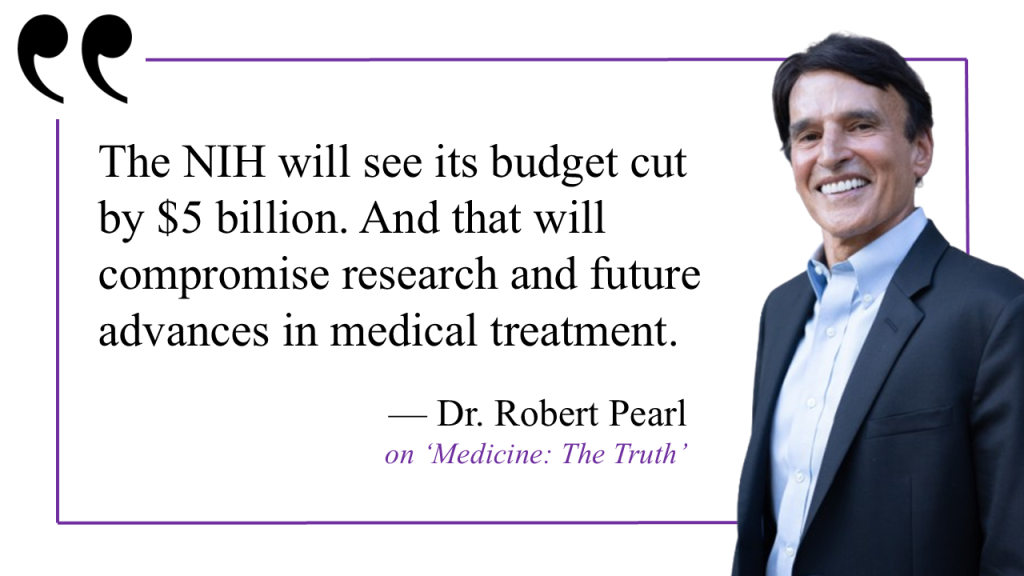
The conversation opens with a stark warning. Dr. Pearl reviews the president’s proposed 2027 budget, which includes a $15.8 billion reduction in healthcare spending. He explains why cuts to Medicaid, NIH research and global health programs could have consequences that extend far beyond the next fiscal year, potentially slowing innovation, increasing patient risk and shifting costs to states and families.
From there, the episode turns to one of the most asked-about topics from listeners: GLP-1 weight-loss drugs. While these medications clearly produce meaningful weight loss and improve outcomes in conditions tied to obesity, Dr. Pearl cautions that many of the broader health claims attributed to them may simply reflect the benefits of weight loss itself, not unique properties of the drugs.
Throughout the episode, an underlying truth: scientific progress continues but policy decisions, pricing dynamics and system design may limit who benefits (and at what cost).
Here are the other major storylines from episode 106:
- Federal health cuts threaten long-term progress: The proposed budget reduces overall healthcare funding by 12.5%, cuts NIH support by $5 billion and consolidates public health agencies.
- Global health funding drops sharply: International health spending is being cut nearly in half, while continued withdrawal from the World Health Organization leaves the U.S. more vulnerable to future pandemics.
- CDC leadership signals a policy shift: The nomination of Dr. Erica Schwartz as permanent CDC director suggests a move back toward a more traditional, science-driven approach to vaccines.
- RFK Jr. softens vaccine stance amid political pressure: In congressional testimony, the HHS secretary publicly acknowledged the safety and effectiveness of the measles vaccine.
- GLP-1 drugs deliver clear weight loss and major benefits: Studies show 10-20% weight reduction, along with approximately 20% improvements in kidney and cardiovascular outcomes.
- Many GLP-1 “breakthroughs” may reflect weight loss alone: Evidence linking these drugs to reduced cancer risk, improved cognition or lower addiction rates remains fuzzy at best.
- Exercise rivals the impact of breakthrough drugs: A large study shows vigorous physical activity reduces risks of dementia, diabetes, cardiovascular disease and death at levels comparable to or greater than GLP-1 outcomes.
- Stress does not directly cause cancer: Pearl explains that while many Americans believe stress leads to cancer, the real risk comes from behavioral responses such as increased smoking and alcohol use.
- Concierge medicine expands access for some: Patients who can afford annual fees gain faster access and more time with physicians, but the model reduces availability for others.
- China rapidly closes the drug development gap: New data show China’s share of global pharmaceutical research rising to over 32%, nearly matching the United States.
- Exchange coverage declines and risk pools worsen: Millions may lose insurance due to subsidy changes, premium nonpayment and shifts to high-deductible plans.
- Drug prices continue to rise despite reform efforts: Under the TrumpRx program, lower prices on select drugs have been offset by increases elsewhere, with new medications averaging $353,000 annually.
- Robotics and AI may arrive faster than expected: A dramatic improvement in robot race performance leads Dr. Pearl to revise his estimate for clinical adoption of robotic procedures.
Tune in for more fact-based analysis and practical perspective on the healthcare policies, technologies and trends shaping medicine today.
* * *
Dr. Robert Pearl is the author of “ChatGPT, MD: How AI-Empowered Patients & Doctors Can Take Back Control of American Medicine” about the impact of AI on the future of medicine.
Fixing Healthcare is a co-production of Dr. Robert Pearl and Jeremy Corr. Subscribe to the show via Apple, Spotify or wherever you find podcasts. Join the conversation or suggest a guest by following the show on X and LinkedIn.