
Podcast: Play in new window | Download
Subscribe: Spotify | Email | RSS | More
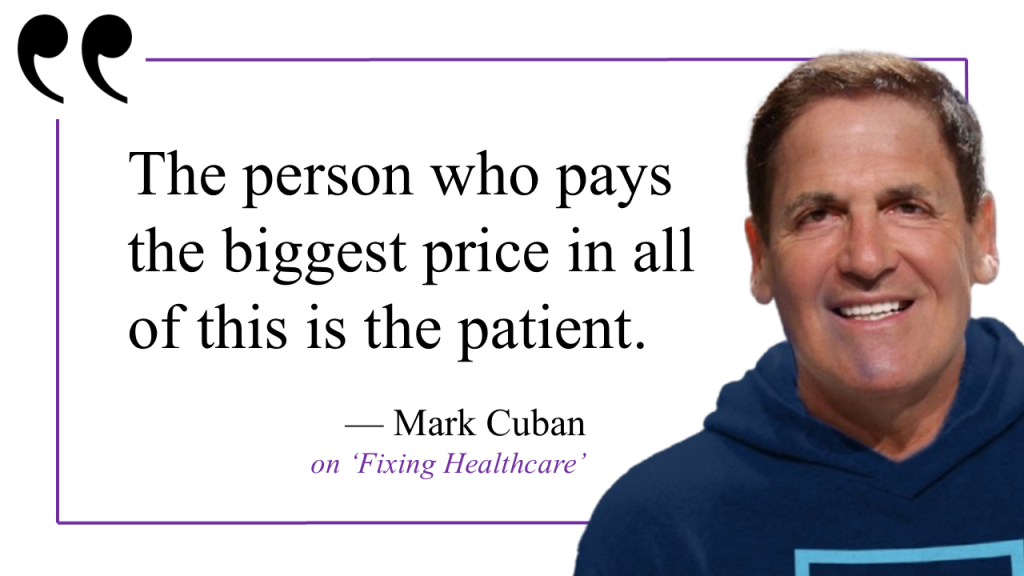
With healthcare costs projected to rise sharply next year, Fixing Healthcare with cohosts Dr. Robert Pearl and Jeremy Corr revisits one of the most popular conversations of the year: an interview with Mark Cuban, entrepreneur, longtime Shark Tank investor, former owner of the Dallas Mavericks and founder of Cost-Plus Drugs.
Cuban has built his healthcare work around a deceptively simple idea: patients, employers and clinicians should be able to see what things actually cost.
That should not be radical. But in American healthcare, transparency can feel disruptive because so much of the system depends on complexity, opacity and hidden incentives.
In this rerun episode, co-hosts Dr. Robert Pearl and Jeremy Corr return to Cuban’s blunt diagnosis of what is broken in healthcare. His argument begins with prescription drugs, where pharmacy benefit managers, rebates, spread pricing and opaque contracts often leave patients paying far more than they should. But the conversation quickly expands beyond medications to the broader dysfunction of American medicine.
Cuban’s approach to drug pricing is straightforward. Through Cost Plus Drugs, the company shows patients the actual cost of a medication, adds a flat markup and eliminates many of the middlemen who benefit when prices are hidden. The result is a model built not on secrecy, but on visibility.
That philosophy matters even more now, as patients and employers brace for rising healthcare costs. For many Americans, affordability is no longer an abstract policy concern. It determines whether they fill a prescription, schedule a visit, delay treatment or avoid care entirely.
Cuban’s critique is that the system is not merely complicated. In many ways, it is designed to be complicated. Patients struggle to understand what they owe.
Employers often do not know whether they are receiving the rebates they were promised. Doctors waste time fighting prior authorization, billing complexity and administrative rules that make care slower and more frustrating. Meanwhile, the organizations that benefit from opacity have little incentive to simplify anything.
The episode highlights several of Cuban’s core arguments:
- Drug prices are often detached from manufacturing costs, clinical value and common sense.
- Patients in deductible phases, especially those with ACA plans, can bear the full financial burden while rebates and savings flow elsewhere.
- Employers often assume their pharmacy benefit contracts protect them, when the details may tell a different story.
- Complexity protects incumbents by making it difficult for patients, clinicians and purchasers to see who benefits from the current system.
- Transparency gives patients and employers leverage by exposing prices, incentives and financial arrangements that otherwise remain hidden.
What makes Cuban’s perspective powerful is that he comes to healthcare as an outsider. He is not defending legacy structures, professional norms or institutional habits. He asks a simpler question: if the system were designed around patients, would it look anything like this? For Cuban, the answer is no.
That is why this conversation remains timely. As healthcare costs continue to rise, marginal reforms and better messaging are not enough. Patients need affordability. Employers need visibility. Clinicians need less administrative friction. And the system needs incentives that are easier to understand and harder to hide.
Cuban’s message is that healthcare does not need more opacity, more jargon or more excuses. It needs sunlight. Listen again to this conversation with Mark Cuban and decide for yourself: if transparency can lower drug costs, what else in healthcare could it change?
Helpful links:
- Original Mark Cuban episode
- Mark Cuban Cost Plus Drug Company
- ChatGPT, MD: How AI-Empowered Patients & Doctors Can Take Back Control of American Medicine
* * *
Fixing Healthcare is a co-production of Dr. Robert Pearl and Jeremy Corr. Subscribe to the show via Apple, Spotify or wherever you find podcasts. Join the conversation or suggest a guest by following the show on X and LinkedIn.